How to Find a High-Quality Entry on a Meme Coin Without Chasing the Pump
Need articles like this for your video? They help promote it on YouTube and Google — order them in the Telegram bot @sat_sit_bot. The bot writes and publishes the articles itself (with your YouTube video embedded) on popular topical websites (no ads). Free trial — 50 articles.
· based on the channel starwifpump
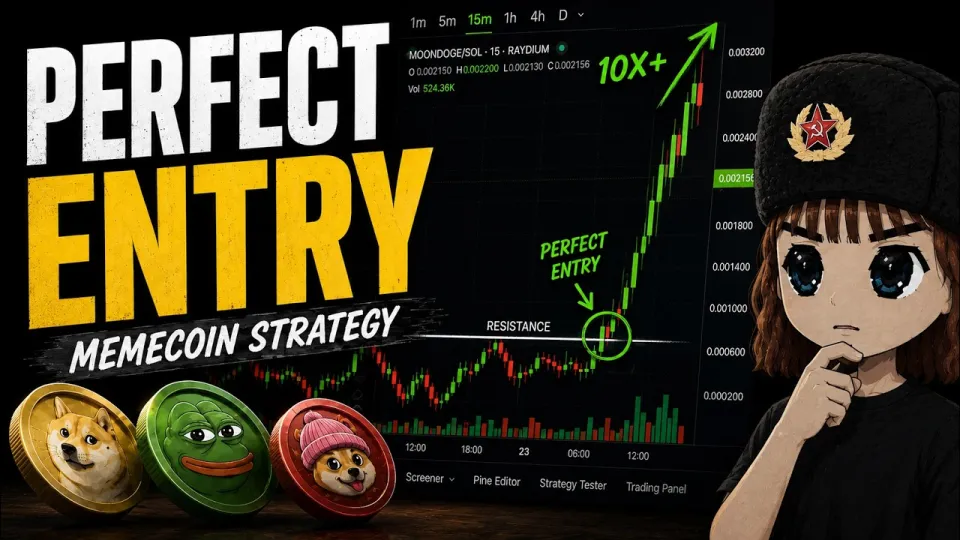
A good meme coin entry is not the first green candle you see — it is a confirmed setup where momentum, a pullback to support and a pre-planned invalidation level line up before you click buy. Most traders lose on meme coins because they enter at the wrong moment, not because they picked the wrong token. The process below turns that timing problem into a repeatable checklist, and the same framework is broken down step by step in the starwifpump video «How I Find the PERFECT Entry on Memecoins». For early access to the multi-tool terminal the author promotes, join the Plasma Telegram channel.
Why the entry matters more than the coin on a meme coin trade
On a meme coin, the difference between a good and a bad entry is usually the difference between a 2R trade and a liquidation. Meme coins move in violent vertical phases followed by deep retracements, so the same token can be a great trade from one price level and a terrible one from another. Narrative, community and liquidity decide whether a coin is worth watching; the chart decides whether it is worth buying right now. That is why experienced traders separate two questions: is this coin interesting, and is this moment an entry?
The pre-entry checklist before you look at a meme coin chart
Before any technical work, filter out coins that cannot support a clean entry at all. A short pre-check saves more money than any indicator:
- Liquidity and holder distribution — a pool too thin to absorb your size will slip your fill and trap your exit.
- Contract and dev history — check for mint authority, freeze authority, honeypot behaviour and whether the deployer has dumped previous coins.
- Narrative freshness — a coin riding a trend that is already three days old has usually spent its momentum.
- Volume structure — rising volume on up-moves and falling volume on pullbacks is healthy; the reverse is a warning.
- Timeframe choice — pick one intraday timeframe for entries and one higher timeframe for context, and do not switch mid-trade to justify a losing position.
The setups worth waiting for: momentum plus a pullback
A high-quality meme coin entry combines confirmed momentum with a controlled retracement, never a blind chase of a vertical candle. The pattern repeats across Solana meme coins and other chains:
- Impulse, then pause. Price makes a strong move on volume, then consolidates sideways or drifts back instead of collapsing.
- Pullback into support. The retracement lands on a level that already mattered — a previous breakout zone, a consolidation floor, or a moving average that has held before.
- Higher low. The pullback stops above the previous swing low, which tells you buyers are still defending the structure.
- Reclaim or continuation candle. A close back above the short-term level with volume confirms that the pullback is finished.
The entry itself sits at the confirmation, not at the bottom of the pullback. You give up a few percent of the move in exchange for evidence that the setup is real.
How to identify momentum without chasing the pump
Momentum is information about participation, not a signal to buy the top of a candle. Read it through three lenses: the size and speed of the impulse, the volume behind it, and the behaviour of the price after the impulse ends. A move that keeps accelerating without any pause is the worst possible entry — there is no reference level for your stop and no natural buyer below you. A move that pauses, holds and retests gives you a level to trade against. If a coin has already printed several consecutive explosive candles, the correct action is to wait for the first real pullback, not to enter because the chart looks exciting.
Chart signals that tell you not to enter
Knowing when to skip a trade is half of the strategy, because most bad entries are obvious in hindsight and readable in real time. Skip the setup when:
- price is in a vertical parabola with no consolidation and no pullback;
- volume is fading while price grinds higher — a classic distribution tell;
- liquidity is thin enough that a normal-sized order moves the chart;
- the coin has just printed a blow-off top with a long upper wick and heavy selling volume;
- your only reason to enter is that the coin is trending on social media;
- the invalidation level is so far away that the position size required to respect it is uncomfortable.
Planning risk, exits and profit-taking before the trade
Risk planning happens before the entry, not after the price goes against you. Define three numbers in advance: the entry zone, the invalidation level where the idea is wrong, and the first target where you take partial profit. Position size is then derived from the distance to invalidation, so a losing trade costs a fixed, acceptable percentage of the account. On meme coins, scaling out matters more than on major pairs — take a portion off at the first target, trail the rest, and accept that a runner may give back part of its gain. A trade with a defined stop and a planned first exit is a business decision; a trade held on hope is a donation.
Common questions from newer meme coin traders
Beginners tend to ask the same practical things, and the answers are usually about process rather than secrets.
- Which tools should I use to screen coins? A tracker with liquidity, volume and holder filters plus a fast trading terminal is enough; the filters matter more than the brand.
- Does this work on every chain? The mechanics of impulse, pullback and support are chain-agnostic, but liquidity depth and bot activity differ, so position sizing must adapt.
- How do I stop entering out of FOMO? Write the setup conditions down before you open the chart, and treat any entry that does not match them as a skipped trade, not a missed opportunity.
- What if I already lost money on meme coins? Reduce size drastically, trade only setups you can describe in one sentence, and rebuild the process before rebuilding the balance.
- How much should I risk per trade? Small enough that five consecutive losses do not change your ability to take the next valid setup.
Useful links
- Plasma Telegram — early access to the all-in-one meme coin terminal
- Discord community: https://discord.com/invite/fr6zzYyBxC
- Padre trading terminal: https://trade.padre.gg/rk/star
- Solpump: https://solpump.com/a/STARGOAT
- Author on X: https://x.com/starwifpump
The takeaway for your next meme coin entry
A perfect meme coin entry is not a prediction — it is a filter that removes most trades and keeps the ones with a defined risk. Momentum tells you a coin is alive, a pullback to support tells you where the risk sits, and a written invalidation level tells you how much you are willing to pay to find out if you are right. The starwifpump breakdown of this strategy is a useful reference because it focuses on timing rather than narrative. If you want to practise the process with the tools the author uses, start with the Plasma Telegram access link and paper trade the checklist before risking real capital.
Key takeaways
- Most meme coin losses come from timing the entry, not from picking the wrong token.
- A valid setup needs momentum confirmation plus a pullback to a support level, not a green candle chase.
- Every trade needs a pre-defined invalidation level, position size and profit-taking plan before entry.
- Signals that cancel a trade: parabolic vertical move, no pullback, thin liquidity and fading volume.
- A repeatable checklist beats prediction — the goal is process, not calling every move.
Questions & answers
What is the best moment to enter a meme coin trade?
The best moment is after a confirmed impulse and a pullback that holds a support level, when price reclaims the short-term level on volume. Entering during a vertical candle leaves no reference point for a stop and usually produces the worst risk-to-reward.
How do I avoid FOMO when a meme coin is pumping?
Write your setup conditions before opening the chart and treat any trade that does not match them as skipped rather than missed. A coin that is already parabolic without a pause is a reason to wait, not a reason to buy.
Does this entry strategy work on chains other than Solana?
The structure of impulse, pullback and support is chain-agnostic, so the same logic applies across meme coin ecosystems. What changes is liquidity depth and bot activity, which should adjust your position size and invalidation distance.
How much should I risk on a single meme coin trade?
Risk a small fixed percentage of your account per trade, sized from the distance between your entry and the invalidation level. The amount should be small enough that several consecutive losses still leave you able to take the next valid setup.
Source: How I Find the PERFECT Entry on Memecoins 📈 (Full Strategy) · Markdown version