How to start binary options trading as a beginner with a clear plan and realistic risk limits
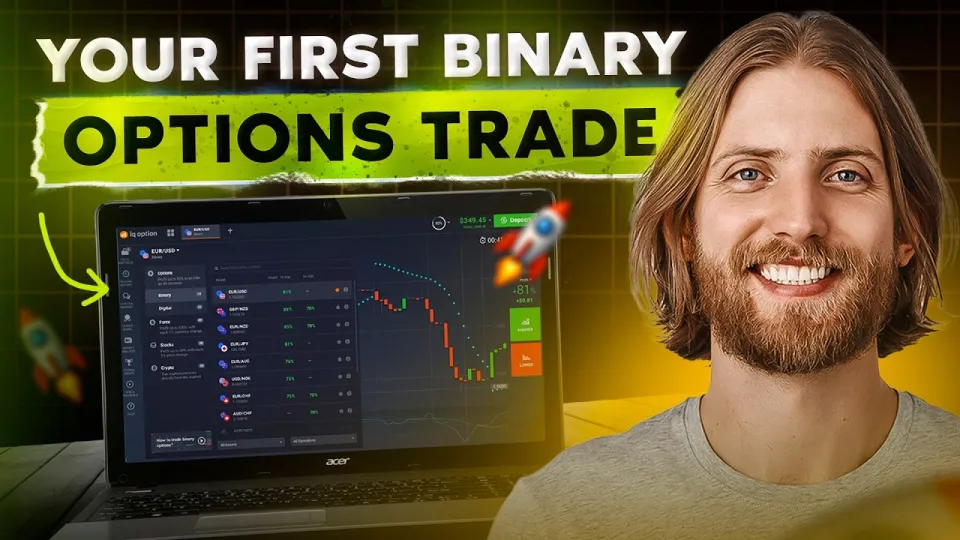
· based on the channel Binary options tutorial for beginners
Binary options are fixed-risk contracts: you predict whether an asset's price will be higher or lower than the current level at a set expiry time, and the trade either pays a fixed percentage or returns nothing. To start, open an account on a regulated-style platform such as Quotex through this registration link, fund it with an amount you can afford to lose, place your first trades on a demo balance, and only move to real money once you have a logged win rate above roughly 55%. The rest of this guide covers the mechanics, the sizing rules and the mistakes that matter.
What a binary option actually is and how the payout works
A binary option is a yes-or-no bet on price direction with a fixed payout and a fixed loss, which is why it is called binary. You choose an asset (EUR/USD, gold, Bitcoin, a stock index), a direction (Call/Up or Put/Down), a stake and an expiry. If the price is above your entry level at expiry, a Call pays out; if below, a Put pays out. A typical payout is 70–90% of the stake on a win, while a loss costs the full stake.
That asymmetry is the single most important number for a beginner. With an 80% payout you need a win rate of about 55.6% just to break even (1 / (1 + 0.8)). With a 70% payout the break-even win rate rises to roughly 58.8%. Any strategy that does not clear that threshold loses money over time, no matter how good individual trades look.
Expiries usually range from 60 seconds to a full day. Short expiries feel exciting and produce fast feedback, but they add spread noise and randomness to the outcome, which is exactly what a new trader cannot afford.
Setting up an account and choosing a platform
The first practical step is picking a platform that offers a demo account, transparent payouts and a withdrawal process you can verify. Three platforms are referenced in the video materials: Quotex, Pocket Option and Binarium. All three work in a browser and through mobile apps, and all three offer a practice balance.
A sensible setup sequence looks like this:
- Register on the platform and complete identity verification before depositing, not after.
- Open a demo account and set the same stake size you would use with real money.
- Check the payout percentage on the asset you intend to trade — it changes by asset and by expiry.
- Confirm the minimum deposit, the minimum trade size (often $1) and the withdrawal fees.
- Only then make a first deposit, and keep it small.
A VPN is not a trading tool, but traders in restricted jurisdictions often use one to reach a platform; the video materials include a NordVPN link for that purpose. Treat it as access infrastructure, not as part of the strategy.
Choosing expiries and assets that suit a beginner
Longer expiries give your analysis room to work, so a beginner should start with 5–15 minute contracts on one or two liquid assets. Currency majors such as EUR/USD and GBP/USD have tight spreads and react to scheduled news, which makes them easier to analyse than exotic pairs or small-cap stocks. Gold and Bitcoin are popular but far more volatile, and a 1-minute expiry on Bitcoin is closer to a coin flip than a trade.
Practical rules for the first month:
- Trade one asset only until you can describe its behaviour during the London and New York sessions.
- Avoid expiries under 5 minutes entirely.
- Skip trades in the 15 minutes around major data releases (US CPI, NFP, central bank decisions) unless that release is the reason for the trade.
- Keep a written log: asset, time, direction, expiry, stake, result, and the reason for entry.
Position sizing and bankroll rules
Risk control is what separates a trader who survives a losing streak from one who deposits again a week later. A losing run of 6–8 trades in a row is statistically normal even with a 60% win rate, and the account must be able to absorb it.
A workable framework:
- Risk 1–2% of the balance per trade. On a $500 account that is $5–$10 per contract.
- Cap daily losses at 5% of the balance and stop for the day when you hit it.
- Cap the number of trades per session at 5–10; overtrading is the most common account killer.
- Do not increase stake size after a loss to "win it back" — martingale-style doubling blows up accounts faster than bad analysis.
- Withdraw a portion of profits regularly so the account balance reflects real progress.
A simple beginner strategy and a typical question about signals
The most common doubt among new traders is whether they need paid signals or a "manual" to start, and the honest answer is no: a simple, repeatable setup beats a subscription. One straightforward approach is trend-following with confirmation on a 5-minute chart.
- Mark the direction using a 50-period moving average on the 5-minute chart.
- Wait for price to pull back to the moving average rather than chasing an extended move.
- Confirm with a momentum reading (RSI back above 50 in an uptrend, below 50 in a downtrend) and a candlestick rejection.
- Enter a Call or Put with an expiry of two to three candles (10–15 minutes).
- Skip the trade if any of the three conditions is missing.
Test the setup on demo for at least 100 trades before risking money. If the win rate stays below the break-even threshold for your payout, change one variable at a time rather than adding indicators.
All platform links from the video
These are the platforms and tools referenced in the video description, listed for convenience:
- Quotex: https://dakaklik.com/_quotex?creative_id=WzzpYsjS3ps
- Pocket Option: https://dakaklik.com/_PocketOption?creative_id=WzzpYsjS3ps
- Binarium: https://dakaklik.com/_Binarium?creative_id=WzzpYsjS3ps
- NordVPN: https://dakatop.link/Nord_us?creative_id=WzzpYsjS3ps
Conclusion
Binary options reward discipline far more than prediction: a fixed payout means the maths of win rate and stake size decides the outcome, not a single lucky call. Start on demo, trade one liquid asset with expiries of 5 minutes or longer, risk 1–2% per trade, and log every entry so you can measure whether your win rate clears the break-even line. When you are ready to trade real money, you can register a Quotex account here and start with a small deposit. The video breakdown on this topic comes from the channel Binary options tutorial for beginners, which walks through the platform setup step by step.
Key takeaways
- A binary option pays a fixed amount if your price prediction is correct at expiry and returns nothing if it is wrong, so every trade is all-or-nothing.
- Common contract expiries run from 60 seconds to one day, and short expiries are the fastest way for a beginner to lose money.
- Risking 1–2% of the account balance per trade keeps a losing streak survivable; 5% or more per trade is the standard path to a blown account.
- Platforms named in the video materials are Quotex, Pocket Option and Binarium, all accessible via a browser and mobile app.
- A demo account should be used until at least 100 trades have been logged and the win rate is stable.
Questions & answers
How much money do I need to start binary options trading?
Most platforms accept a minimum deposit of around $10–$50 and a minimum trade size of about $1. A more useful benchmark is stake sizing: if you risk 1–2% per trade, a $100 account means $1–$2 contracts, which leaves very little room to learn. A few hundred dollars gives a beginner enough room to survive a normal losing streak.
Do I need to buy signals or a paid course to start?
No. A single rule-based setup tested on demo for 100 trades teaches more than a signal subscription, because you learn why a trade works or fails. Paid signals also make it impossible to separate your own results from someone else's calls.
Are short 60-second expiries better for beginners?
They are usually worse. Very short expiries add spread noise and randomness, so the outcome depends less on analysis and more on timing luck. Start with 5–15 minute contracts on a liquid pair such as EUR/USD.
What win rate do I need to break even?
It depends on the payout. At an 80% payout you need about 55.6% winning trades; at 70% you need roughly 58.8%. Anything below that line means the account slowly drains even when trading feels successful.
Source: Binary Options | Binary Options Tutorial for Beginners | Where Should You Start? · Markdown version